ScamSafe
A novel solution to protect older adults from digital scams
SPONSORED BY
Georgia Tech HCI
MY ROLE
UX Researcher + Designer
TIMELINE
4 months
TEAM
Ashlyn, Mandy, Mili
PROBLEM
Scams are surging, and older adults are among the most vulnerable groups due to social isolation, lower digital literacy, and a general tendency to trust others. Current solutions are often blocked by paywalls or are ineffective at empowering users who lack technical confidence
Older adults lost over $700M to scams in 2024 alone, with losses for those over 60 increasing by 800% since 2020.
So, we asked ourselves:
How might we design an accessible solution that addresses the emotional, educational, and technical needs of older adults to prevent them from being scammed?
SOLUTION
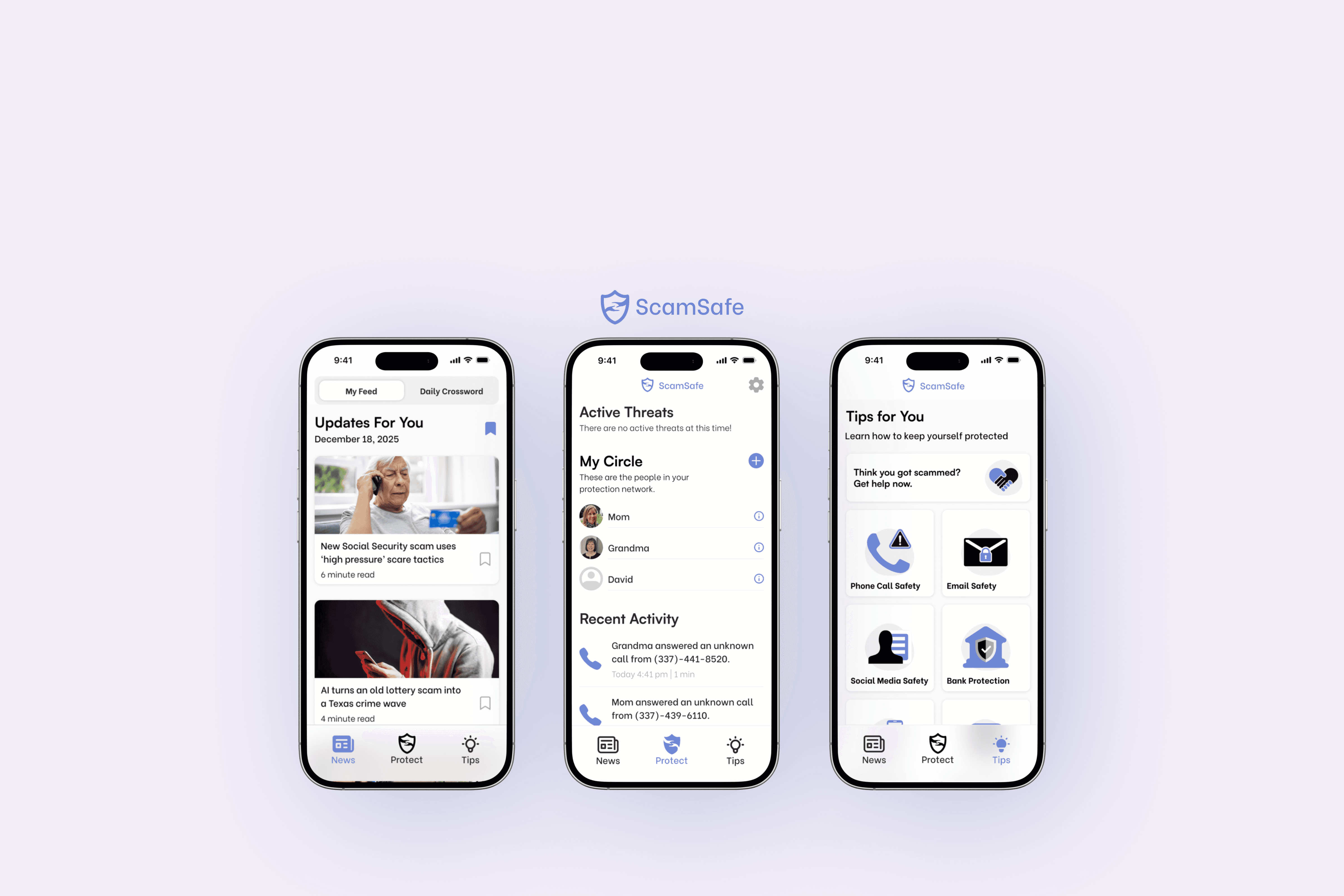
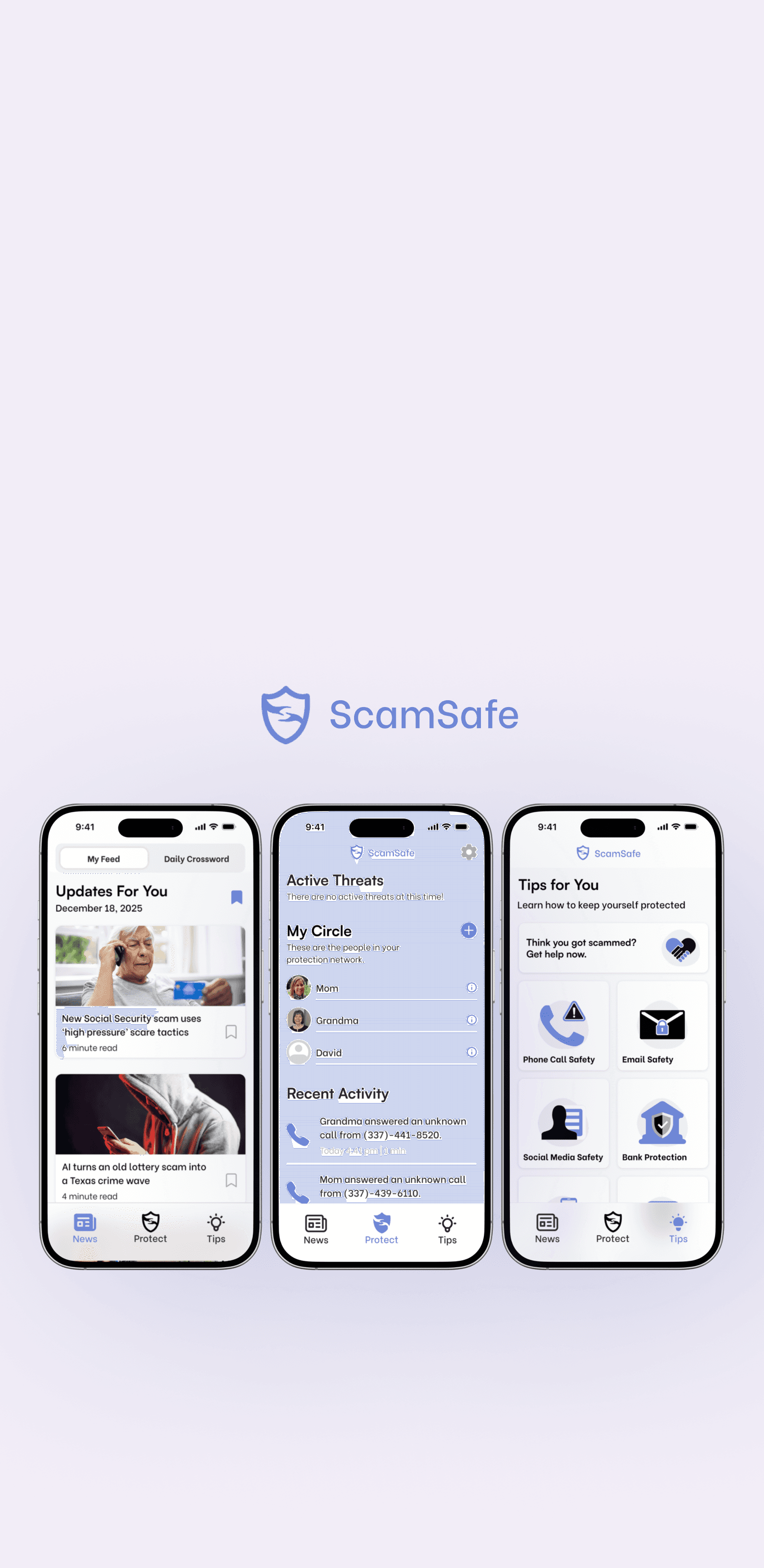
Our solution educates and empowers at the same time. ScamSafe is an app that uses 'Human Factor Authentication'
The result of around 4 months of UX research and design was a redesigned onboarding system, a new QR code phone login, and a 1 step log in for returning users using their mobile wallet
DUAL APPROACH: PREVENTION AND EDUCATION
A comprehensive safety ecosystem that doesn't compromise on either and keeps users updated with the latest scam tactics.
HUMAN FACTOR AUTHENTICATION
When suspicious activity occurs—like a high-value transfer or installing unknown software—a trusted contact is notified and can intervene before the damage is done.
TIPS AT THE TIP OF YOUR FINGER TIPS
The app's Tips section focuses on real-time threats. It delivers bite-sized, jargon-free updates on how to keep yourself safe.
USER RESEARCH
4 months, 4 research methods, 2 data representation methods
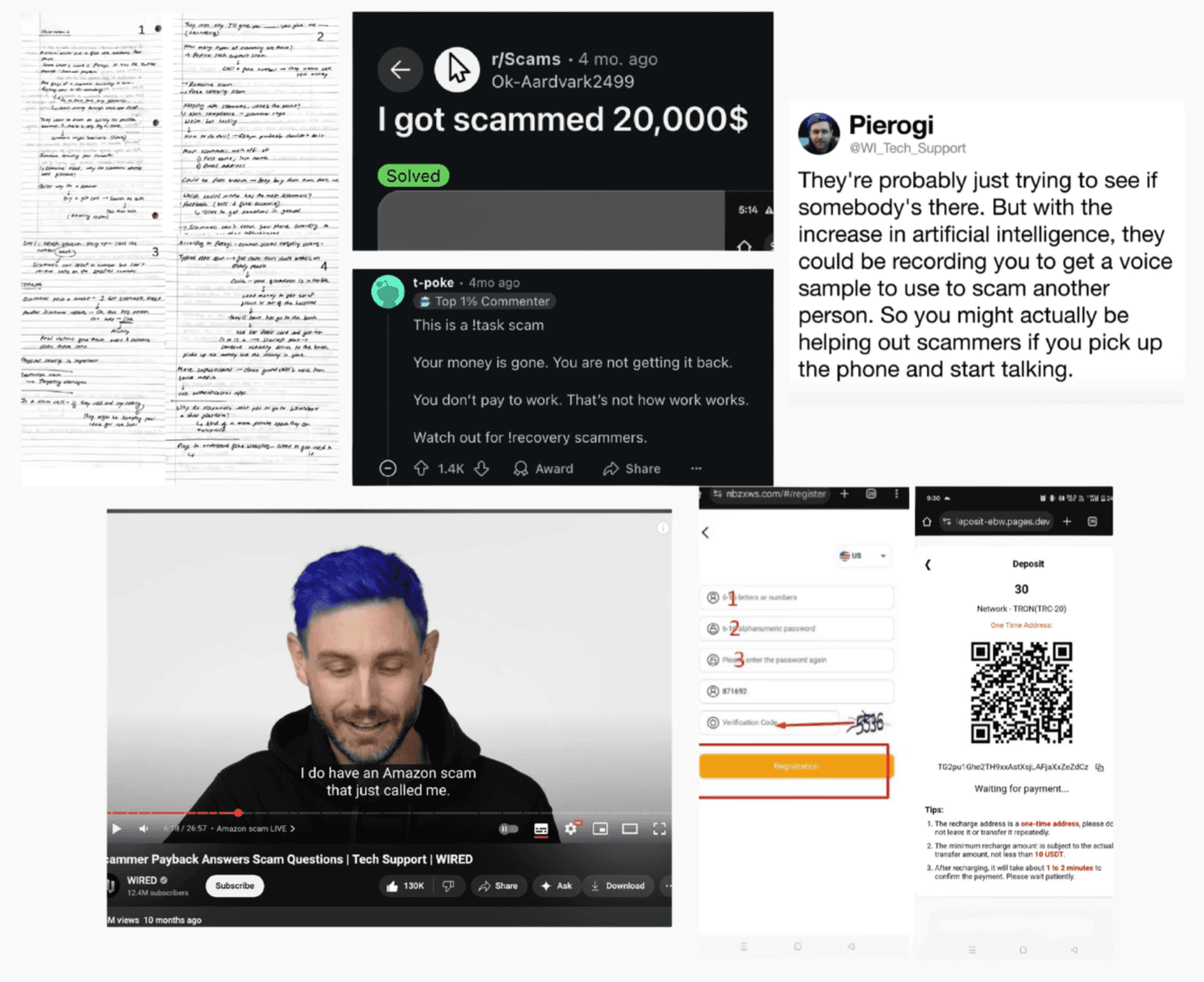
We utilized a "wide and deep" data collection strategy to understand the emotional landscape of fraud victims.
Social media mining of scam recollections from multiple perspectives on Reddit, Tiktok and Youtube
DATA COLLECTION
The data collection process throughout all the research methods was very rigorous and included handwritten notes, hours of social media mining and transcribing interviews
KEY FINDINGS
We identified 4 key findings that eventually guided our design implications and final product
Shame Silences Victims Our interviews revealed that deep shame and embarrassment often force victims into silence. This under-reporting leads to further social isolation, creating a vicious cycle that makes them vulnerable to future attacks.
Support is Reactive, Not Proactive Older adults rely heavily on "warm experts" (trusted family members) for tech help, but this support typically arrives only after a scam has occurred. Research shows that moving this "active mediation" to before the incident is the most effective defense.
Paywalls or Poor UX The current market fails the user on two fronts: effective tools (like comprehensive security suites) are often locked behind expensive paywalls, while free educational resources are too text-heavy and complex for users with lower digital literacy.
Panic Overrides Logic Our analysis of scam-baiting logs and videos revealed that scammers weaponize false urgency. This forces the victim into a high-anxiety state where critical thinking shuts down, proving that the solution must act as a "pause button" rather than just a firewall.
Scammers weaponize isolation. ScamSafe weaponizes trust.
To truly protect older adults, we must shift the burden of security from the isolated individual to their trusted guardians before the damage is done.
DESIGN PHASE
We sketched, prototyped, and evaluated concepts based on user needs and design implications
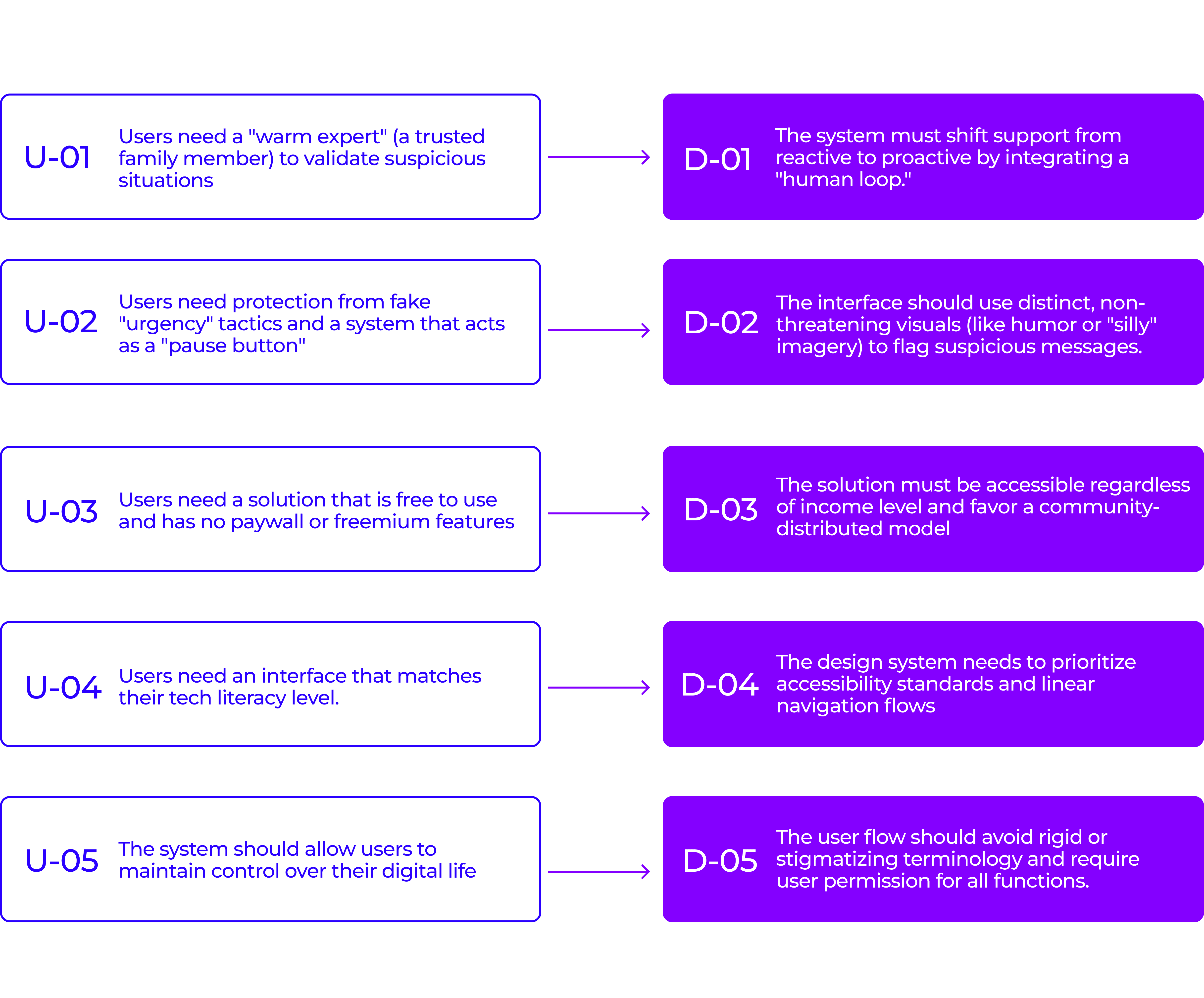
It started with identifying design implications.
USER NEEDS AND DESIGN IMPLICATION
We identified 5 key needs and set implications based on those.
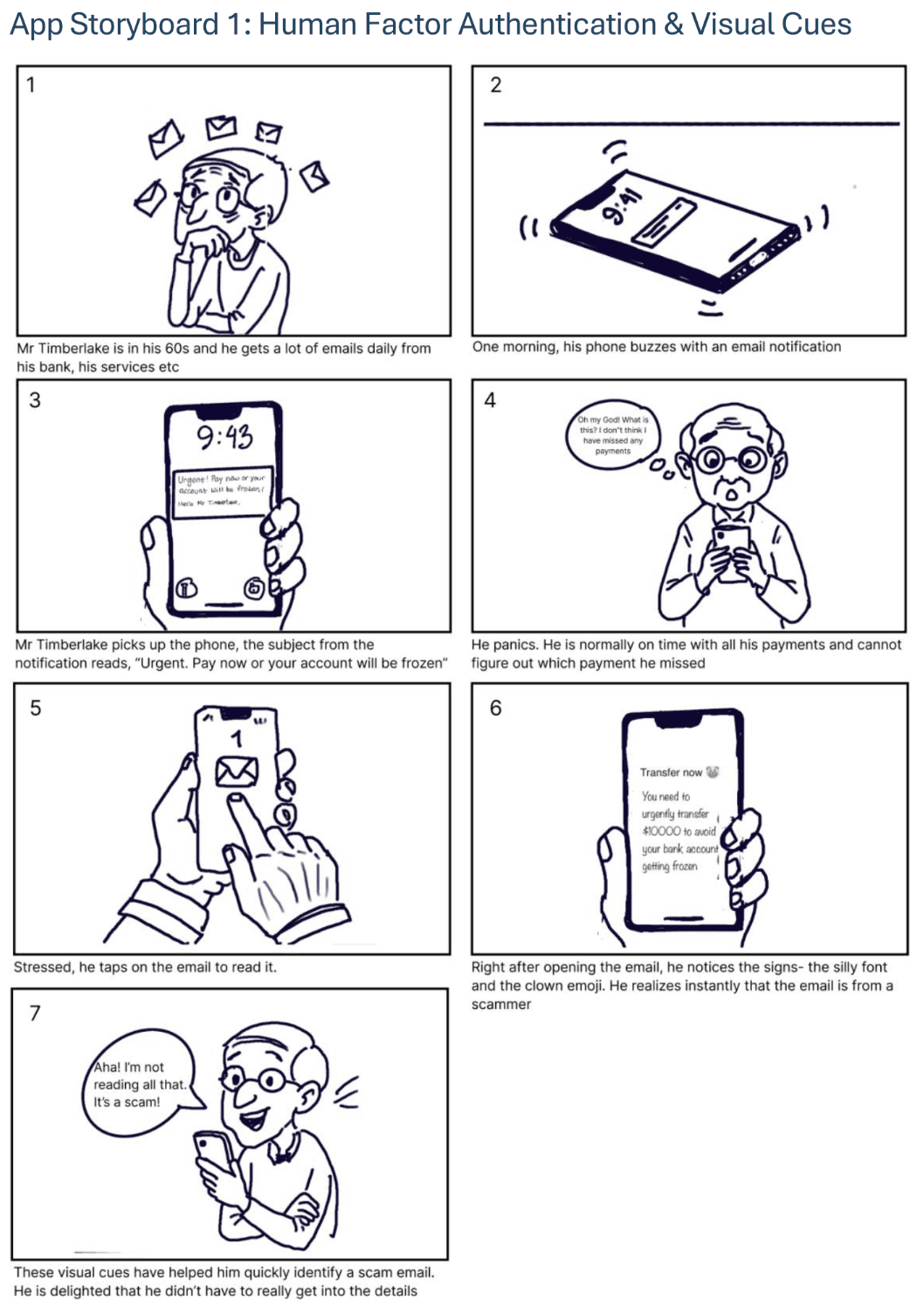
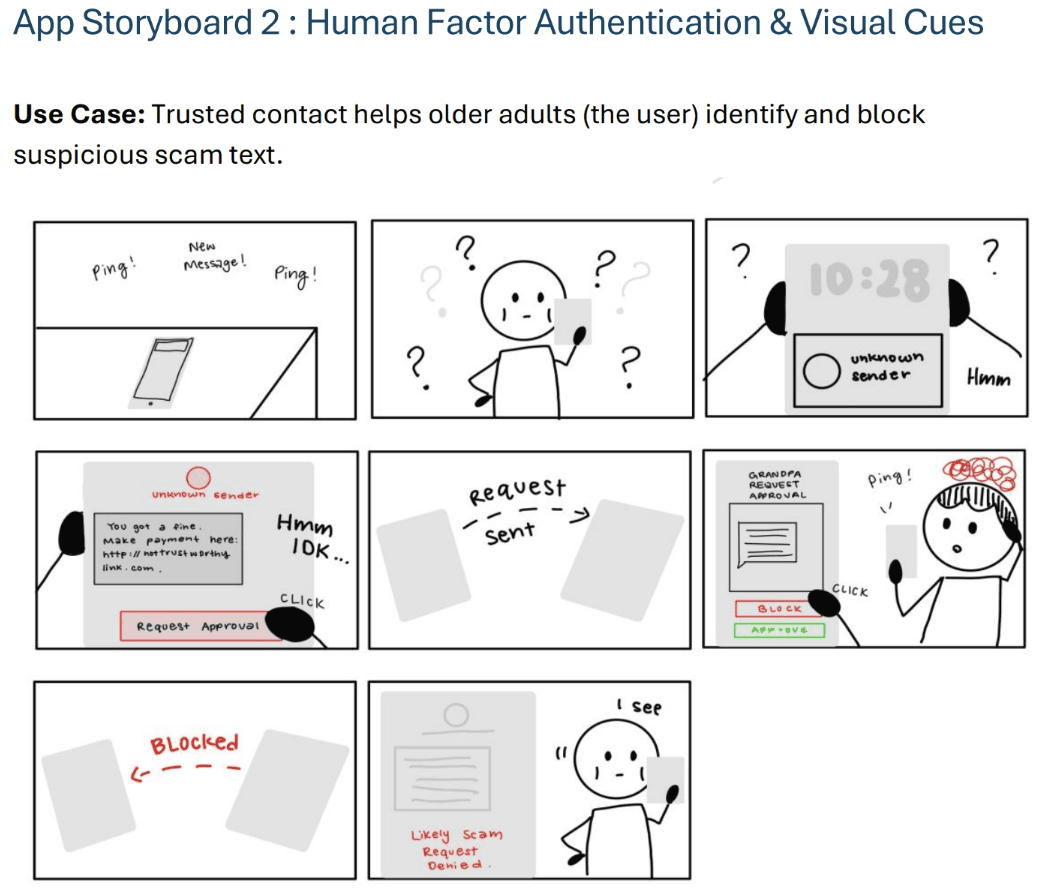
BRAINSTORMING AND STORYBOARDING
Storyboarding put us in the shoes of the users and emulated real life scenarios of using the app
DESIGN SYSTEM
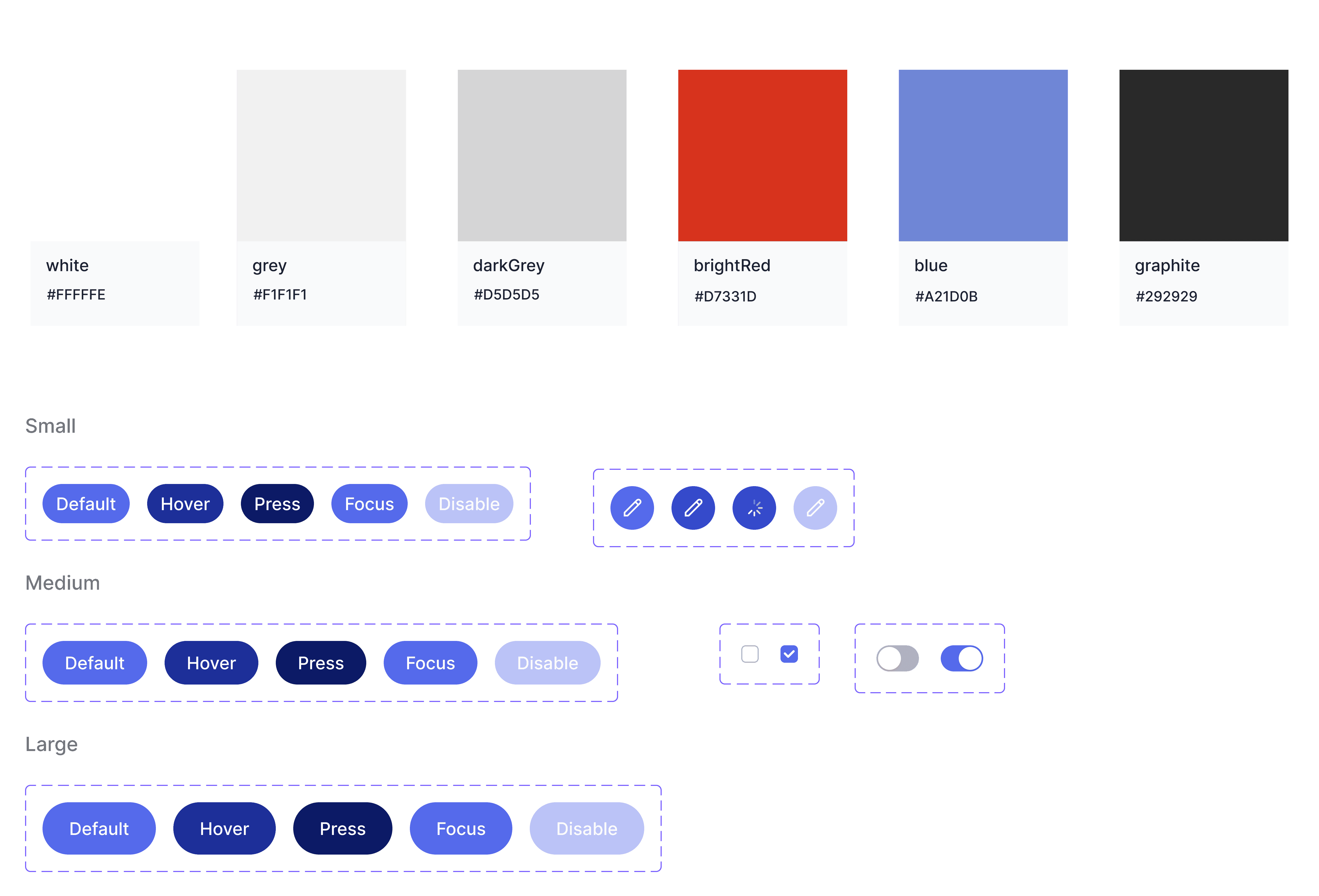
The design system put emphasis on feedback and colors that look approachable
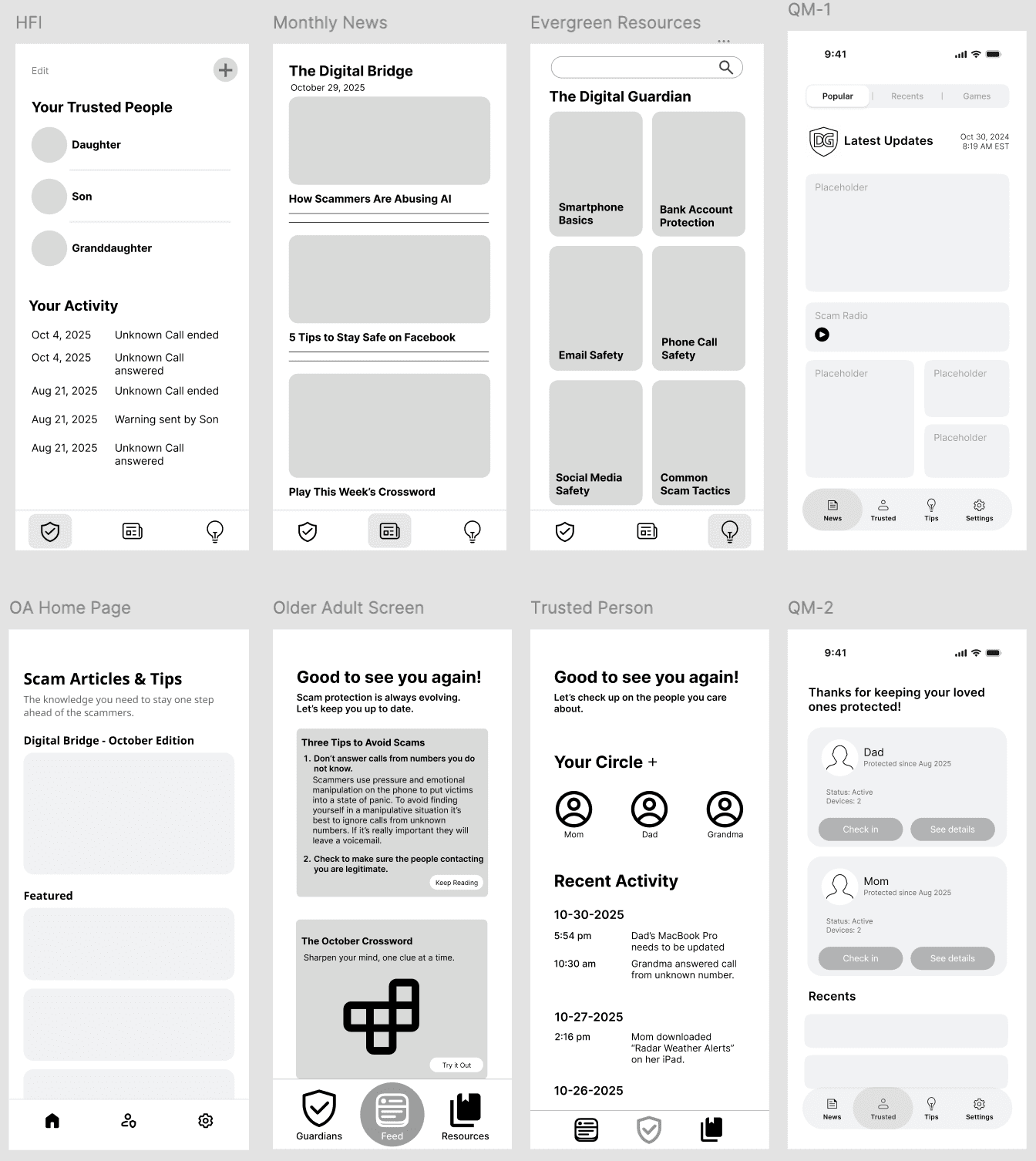
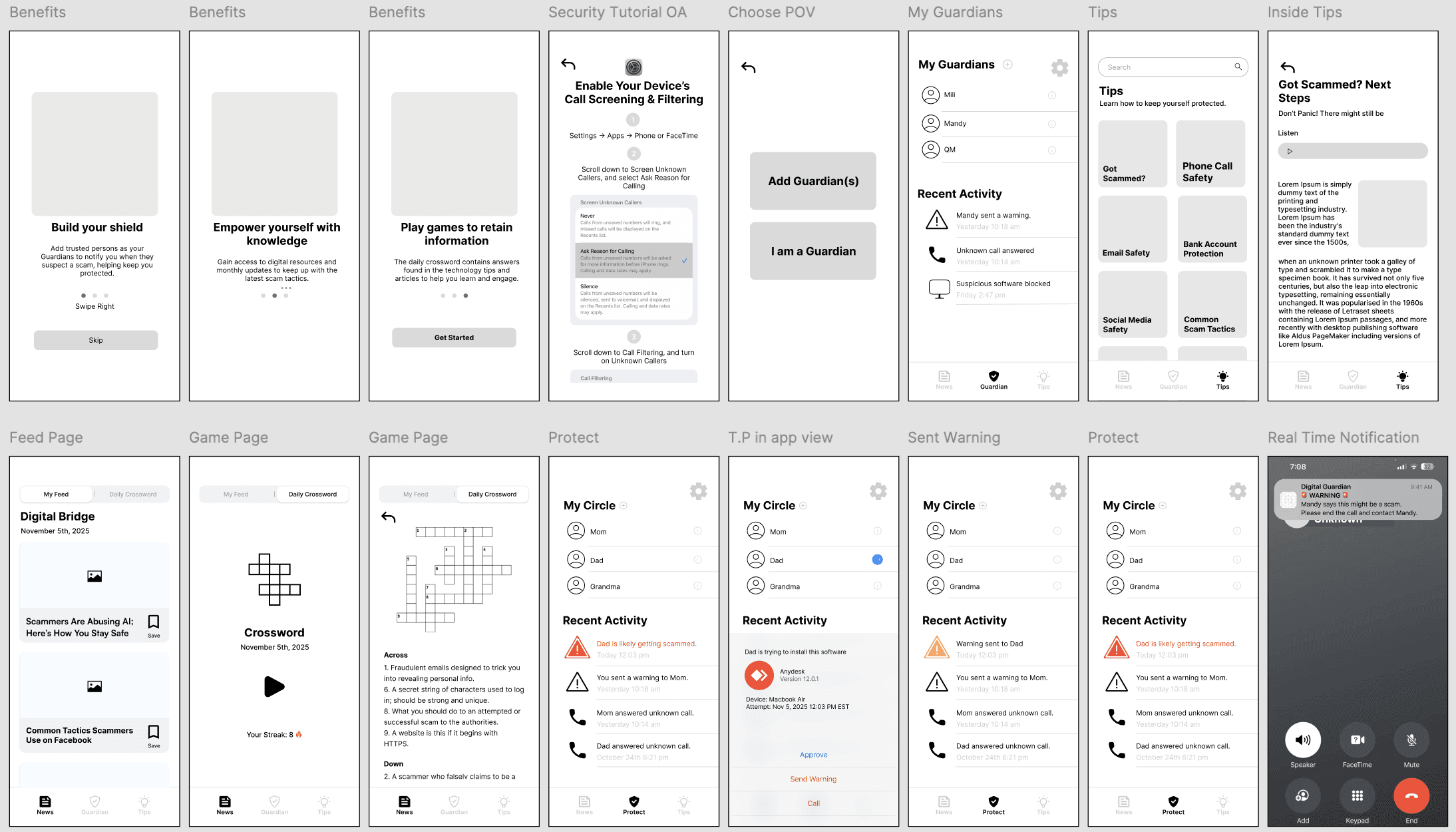
WIREFRAMING
The wireframes were meant to test our concepts and we evaluated them with users
PROTOTYPING
Based on feedback, we made our final prototype.
Here are some of my favorite finished screens :)
FINAL OUTCOME
We iterated based on the evaluations and finalized our prototype.
Try out the final Figma prototype below:
Other Projects
Explore the full archive →